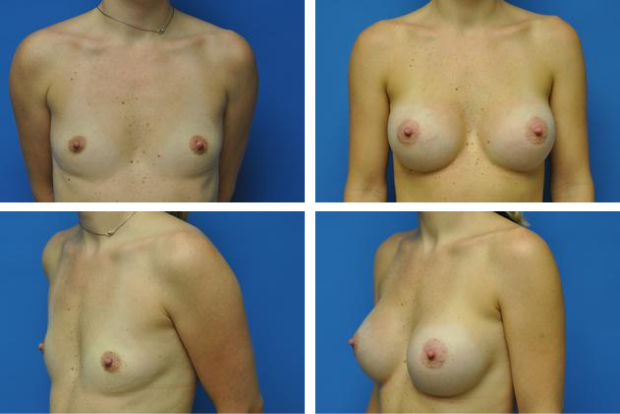
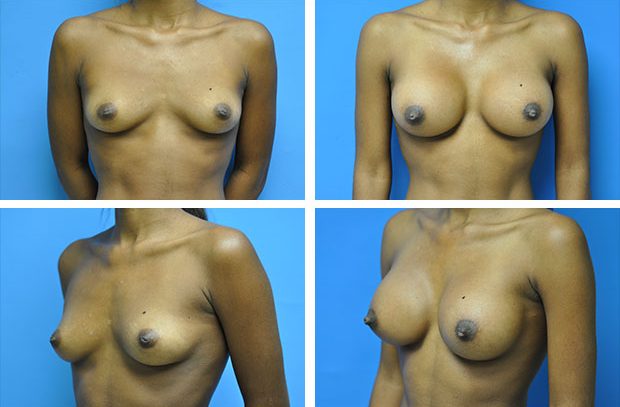
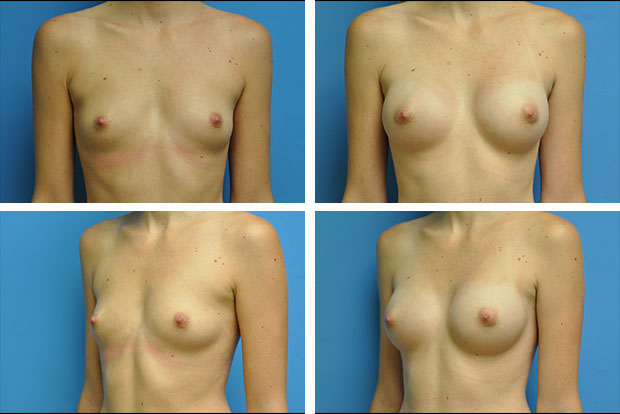
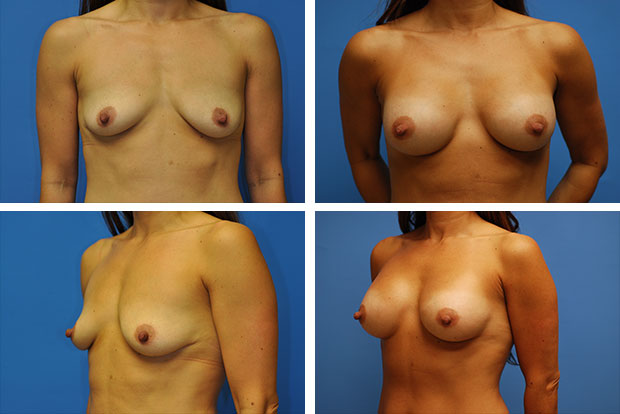
Overview
When the First Surgery Isn't the Last Word
Breast implants are durable, but they are not permanent. Over time — sometimes years, sometimes decades — many women find themselves considering revision surgery. Perhaps the implants have aged. Perhaps a complication has developed. Perhaps tastes have simply changed, and what felt right at twenty-five no longer reflects who you are at forty-five. Whatever the reason, breast implant revision is one of the more nuanced and technically demanding areas of plastic surgery, and the surgeon you choose matters enormously.
Dr. Newman's practice actively welcomes revision cases — including complex ones that have been declined elsewhere. His fellowship training at Georgetown University under two of the world's foremost breast surgeons gave him the technical foundation to address the full range of revision scenarios: capsular contracture at every grade, implant malposition, bottoming out, size change (up or down), implant rupture, BIA-ALCL, and straightforward aesthetic dissatisfaction. He approaches each case with a fresh set of eyes and a commitment to understanding exactly what the patient wants from this surgery — not just what went wrong with the last one.
Why Women Seek Breast Implant Revision
The reasons women come to Dr. Newman for revision surgery are as varied as the patients themselves. Some arrive with a clear diagnosis — confirmed rupture on MRI, Grade IV capsular contracture with significant distortion, late-onset swelling raising BIA-ALCL concerns. Others come simply because something has shifted, aesthetically or personally, and they want a different result. The common thread is that each of these situations deserves a thoughtful, individualized surgical plan — not a generic revision protocol.
Capsular Contracture
The most common complication of breast augmentation. The body's scar tissue capsule hardens and tightens, distorting the breast's appearance and feel.
Implant Rupture
Saline ruptures are immediately apparent; silicone ruptures may be "silent" and detected only on imaging. Both warrant timely surgical attention.
Bottoming Out
The implant descends below the natural breast fold over time, causing the nipple to appear too high on the breast and a rounded lower pole.
Size Change
Preferences evolve. Whether a patient wants to go larger, smaller, or simply different, implant exchange allows a meaningful aesthetic recalibration.
BIA-ALCL Concerns
Women with textured implants who develop late-onset swelling or have been counseled about BIA-ALCL risk may wish to pursue en bloc capsulectomy.
Aesthetic Dissatisfaction
Asymmetry, unnatural shape, or a result that simply didn't meet expectations — revision surgery can often correct what the original procedure left unresolved.
Capsular Contracture: Grading and Correction
Capsular contracture is the most frequently treated complication in Dr. Newman's revision practice. Understanding the Baker Classification helps frame the surgical conversation:
| Grade |
Clinical Appearance |
Typical Treatment |
| Grade I |
Breast is soft and natural-appearing. Normal healing response. No treatment needed. |
Observation |
| Grade II |
Breast is slightly firm. Implant may be palpable but appearance is normal. |
Observation or early intervention |
| Grade III |
Breast is firm and visibly abnormal. Implant is easily palpable; breast may appear rounded or distorted. |
Surgical correction — capsulectomy + implant exchange |
| Grade IV |
Breast is hard, painful, and significantly distorted. Significant patient discomfort is common. |
Surgical correction — complete capsulectomy + implant exchange |
For Grade III and IV capsular contracture, Dr. Newman performs a capsulectomy — removal of the hardened capsule — in conjunction with implant exchange. In many cases, he also changes the pocket position from subglandular to dual-plane to reduce the risk of recurrence. In selected cases, capsulorraphy (internal pocket repair/tightening) may be performed to correct implant malposition at the same time.
En Bloc Capsulectomy: Dr. Newman's Protocol
For patients with BIA-ALCL — or patients with textured implants who wish to minimize any theoretical risk — Dr. Newman performs en bloc capsulectomy: removal of the implant and its entire surrounding capsule as a single intact unit, without breach of the capsule during excision. This oncologic approach ensures that any material contained within the capsule is not exposed to surrounding tissues during extraction. Dr. Newman performs this procedure according to established surgical guidelines and, when oncologic staging is indicated, coordinates with appropriate specialists. Patients presenting with late-onset swelling around textured implants should seek prompt evaluation.
Implant Removal Without Replacement
More women are choosing explant surgery — implant removal without replacement — and Dr. Newman respects this as a completely valid choice. The aesthetic outcome after explant alone depends on the amount of native breast tissue present, the skin quality, and how long the implants were in place. Women with meaningful native tissue and good skin elasticity are often pleasantly surprised by the result. In cases where skin laxity is a concern, a concurrent mastopexy (lift) can significantly improve the final appearance.
For women who want to remove their implants but would still like some additional volume — without going back to silicone or saline — Dr. Newman's Forever Breast® fat transfer offers a compelling middle path: explant the implants, perform liposuction to harvest fat, and transfer that fat to the breasts for a natural, implant-free augmentation. The result is softer, lighter, and carries none of the long-term concerns associated with implants.
Why Revision Requires More Skill Than Primary Surgery
Primary breast augmentation is performed in undisturbed, predictable tissue. Revision surgery is not. The surgeon must navigate the modified anatomy created by the original procedure, work within or around scar tissue, and make real-time decisions about pocket management, capsule handling, and tissue reconstruction that have no equivalent in first-time surgery. The more complex the original outcome — and the more times a patient has been operated on — the more demanding the revision becomes. Dr. Newman brings the technical depth and surgical judgment to handle these cases well, and he takes particular satisfaction in delivering the result that prior surgeons could not.
If you have been told that your situation is too complicated, or that your only options are limited, we encourage you to schedule a consultation. Dr. Newman has a long track record of finding solutions where others have seen only obstacles.