Home Procedures Face Facelift

Facelift Beverly Hills

Natural facial rejuvenation that restores what time has quietly altered — without replacing the character and individuality that makes you, you.

Overview

Facial Rejuvenation on Your Terms

Of all the procedures in a plastic surgeon's repertoire, the facelift carries the most mythology — and the most misunderstanding. To many people, the word still conjures images of tight skin, startled expressions, and the unmistakable appearance of having had "work done." That look is the result of a specific technical error: pulling skin under tension. It is not inevitable. It is not what Dr. Newman does.

A well-executed facelift works entirely below the surface of the skin. The structural layer of the face — the SMAS, or superficial musculoaponeurotic system — is a sheet of fibromuscular tissue that connects the facial muscles to the skin. With age, this layer descends. The jowls that form along the jaw, the hollowing in the midcheeks, the deepening of the nasolabial folds — all of these are, in large part, the result of that descent. Dr. Newman addresses them directly, by repositioning the SMAS back to where it once sat.

The skin, released from having to do any structural work, lies effortlessly and naturally over the newly repositioned tissue. There is no tension. There is no distortion. There is simply a face that looks refreshed, restored, and entirely like the person it belongs to.

Deep-Plane vs. SMAS Facelift: Understanding the Difference

Both deep-plane and SMAS facelift techniques address the underlying facial structure rather than merely the skin — but they differ in how they approach it. A traditional SMAS technique lifts and tightens the SMAS layer while treating the overlying fat compartments separately. A deep-plane technique goes deeper still, releasing the SMAS and the overlying fat as a single, unified unit, allowing both to be repositioned together. This approach produces particularly natural results in the midface and cheek area, and is especially effective for patients with significant midface descent, prominent nasolabial folds, or heavier facial structure.

Dr. Newman selects his technique based on your anatomy and the degree of aging present — not on a preference for one approach over another. The two are tools, not philosophies, and the right tool depends entirely on what needs to be accomplished.

Combining a Facelift with Other Procedures

The face ages as a system, and the most natural-looking results often come from addressing it that way. A facelift addresses the lower face and midface beautifully — but the neck, the brows, and the eyelids each age on their own timeline. Many of Dr. Newman's patients choose to combine a facelift with a neck lift, brow lift, or blepharoplasty to achieve a result that harmonizes across all zones of the face. This combination approach requires only one anesthesia event and one recovery period — and the result is balanced in a way that isolated procedures rarely achieve.

Volume loss is another dimension of aging that a facelift alone does not fully address. The cheeks, temples, and under-eye area hollow with time, and no amount of lifting restores what has been lost. Fat transfer — harvesting small amounts of fat from elsewhere on the body and reinjecting them into depleted areas — is a complementary technique Dr. Newman uses frequently to restore that youthful fullness without adding foreign material.

Two Decades in Beverly Hills

Dr. Newman has been performing facelift surgery in Beverly Hills since 2007. In that time, he has refined his technique through thousands of procedures on patients of every age, background, and facial structure. His Georgetown fellowship training gave him an unusually rigorous foundation for facial surgery. His experience as a UCLA faculty member keeps him actively engaged with the current literature and the next generation of techniques. And his Beverly Hills practice has given him a patient population that demands — and receives — the most discerning standard of care in the world.

If you are considering a facelift, we invite you to schedule a consultation with Dr. Newman. He will take the time to understand your goals, assess your anatomy honestly, and give you a genuine answer about what a facelift can and cannot achieve for you specifically. There is no pressure. There is no template. There is only the question of what would make you feel most like yourself again.
Quick Facts
Recovery 2–3 weeks social downtime; light activity at week 2
Duration Results typically last 7–10+ years
Anesthesia General anesthesia
Procedure Time 3–5 hours
Facility Accredited outpatient surgical facility
Hospital Stay Outpatient (same-day discharge)
Financing CareCredit available
Schedule a Consultation

Am I a Candidate?

Who Is a Good Candidate for a Facelift?

Candidacy for facelift surgery is based on anatomy and overall health — not age alone. Many patients are surprised to learn they are good candidates earlier than they expected, or that their age does not disqualify them. Dr. Newman evaluates each patient individually. Typical candidates share several of these characteristics:

  • You have visible jowling along the jawline that makes you appear older or heavier than you feel
  • The midcheek area has descended, flattening or hollowing the face and deepening the nasolabial folds
  • You are in good general health with no conditions that significantly increase surgical risk
  • You do not smoke, or are willing to stop smoking at least 4–6 weeks before and after surgery
  • Your skin retains some elasticity — though not as much as in youth — and your bone structure provides a solid foundation
  • You have realistic expectations: you want to look like a refreshed, rested version of yourself — not a different person
  • You have maintained a relatively stable weight and do not plan dramatic weight loss or gain in the near future
  • You understand that a facelift addresses structural descent and skin laxity, not skin texture, pigmentation, or fine surface lines

The Process

What to Expect: From Consultation to Results

Every facelift at Dr. Newman's practice follows a thoughtful, carefully managed process. Here is what the experience looks like from beginning to end.

01
Consultation

Dr. Newman examines your facial anatomy in detail — skin quality, tissue descent, bone structure, volume loss — and discusses your goals. He explains what a facelift can achieve, what complementary procedures might be appropriate, and gives an honest, unembellished assessment of the realistic outcome.

02
Anesthesia & Preparation

Surgery takes place at a fully accredited outpatient facility under general anesthesia administered by a board-certified anesthesiologist. You are monitored throughout. Dr. Newman performs a careful preoperative marking of the planned incisions, which are positioned to be concealed within the hairline and natural skin creases.

03
Surgical Technique

Incisions are made, the skin is elevated, and the SMAS layer (and, when appropriate, the deep plane) is released, repositioned, and secured. Dr. Newman takes considerable time with the structural layer because this is where the result lives. The skin is then redraped without tension and closed with meticulous suturing.

04
Recovery & Results

You go home the same day with a light dressing. Bruising and swelling peak in the first week and largely resolve by weeks 2 to 3. Most patients feel comfortable appearing in public — with light makeup — by the end of week 2. Final results become fully apparent over 3 to 6 months as residual swelling resolves completely.

Gallery

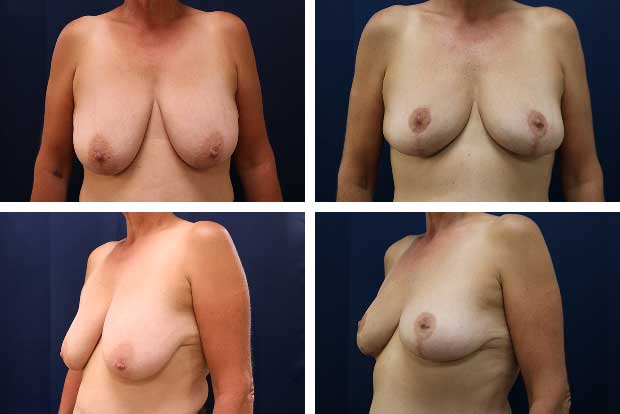
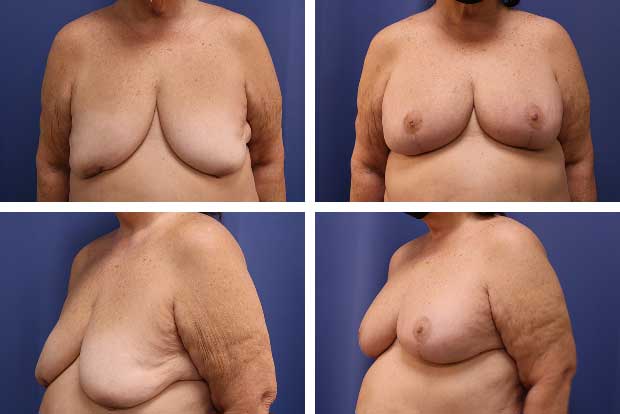
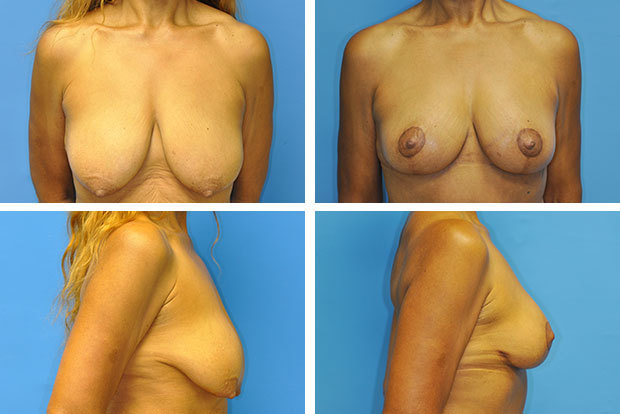
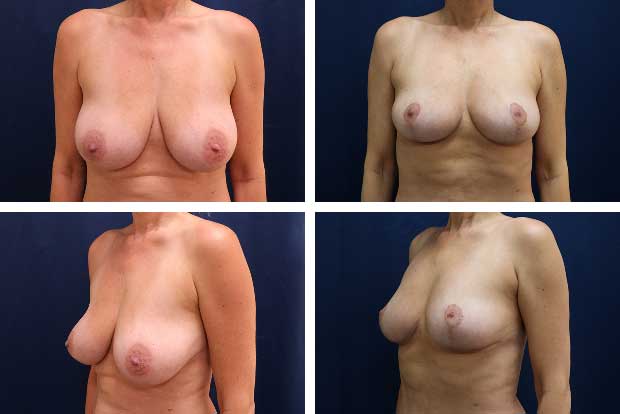
Before & After: Facelift

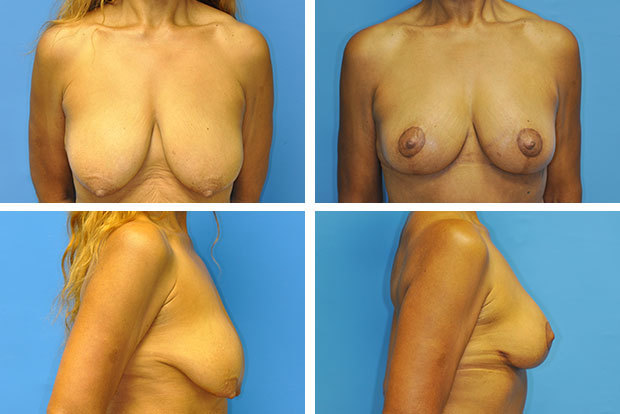
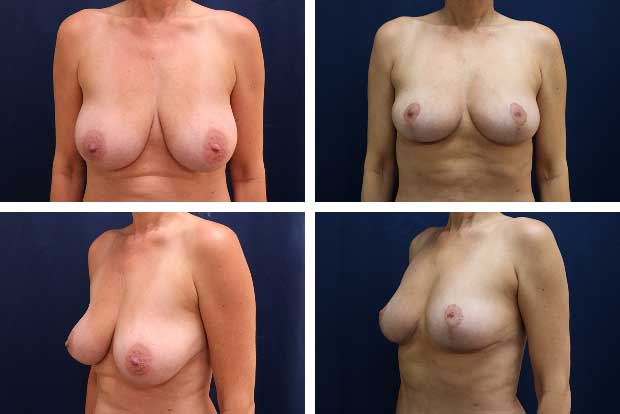
A selection of Dr. Newman's facelift results. All patients are real patients who have consented to share their photographs.

Facelift before and after Beverly Hills — patient 1
Patient 1
Facelift before and after Beverly Hills — patient 2
Patient 2
Facelift before and after Beverly Hills — patient 3
Patient 3
Facelift before and after Beverly Hills — patient 4
Patient 4
Facelift before and after Beverly Hills — patient 5
Patient 5
Facelift before and after Beverly Hills — patient 6
Patient 6

*Each patient is unique. Results may vary. Photos are shown with patient consent.

Frequently Asked Questions

Facelift FAQ

How long does a facelift last?
A well-executed facelift typically produces results that last 7 to 10 years or longer, depending on skin quality, genetics, sun exposure, and lifestyle. Because Dr. Newman's technique works at the level of the underlying SMAS layer and deep tissue — rather than simply pulling the skin — the results age more gracefully than surface-only techniques. Many patients remain satisfied with their facelift results for a decade or more before considering any refinement. Maintenance treatments and healthy habits can extend the longevity of the result.
Will I look natural after a facelift?
The overdone, windswept look associated with older facelift techniques comes from placing tension on the skin. Dr. Newman does not operate on the skin as a structural element — he repositions the underlying SMAS and deep tissue, then allows the skin to drape naturally without any pull. The result looks like a well-rested, refreshed version of yourself. People who see you afterward will notice that you look better — they will not know why, and that is exactly the point. Patients frequently hear comments about a new hairstyle or a great vacation, not about surgery.
What is a deep-plane facelift?
A deep-plane facelift is an advanced technique that releases and repositions both the SMAS layer and the overlying facial fat compartments as a single unified unit — rather than treating them separately. This allows for more natural, thorough repositioning of the midface and cheeks, and produces results that are particularly effective for patients with significant midface descent, deep nasolabial folds, or heavier facial structure. Dr. Newman uses deep-plane technique when a patient's anatomy indicates it will produce the best result — it is a tool, not a routine for all patients.
What is recovery like after a facelift?
Most patients feel comfortable returning to non-strenuous activity within 2 weeks and appear in public — with light makeup — by the end of that period. Bruising and swelling are most pronounced during the first week and resolve progressively over weeks 2 through 4. Mild residual swelling and firmness in the cheeks can persist for 3 to 6 months but are not visible to others. Dr. Newman's team provides detailed post-operative instructions and is available by phone throughout recovery. Drain care is minimal and typically removed within 24 hours of surgery.
Can I combine a facelift with other procedures?
Yes — facelift is very commonly combined with complementary procedures, and doing so is often the most effective way to achieve a balanced, comprehensive result. Common additions include a neck lift (to address the lower face and neck in continuity), blepharoplasty (upper and/or lower eyelid surgery), brow lift, and fat transfer to restore volume to hollowed areas. Combining procedures means one anesthesia event and one recovery period. Dr. Newman will discuss which additions, if any, would meaningfully improve your outcome during your consultation.
Am I too young — or too old — for a facelift?
There is no universally correct age for a facelift. Most of Dr. Newman's facelift patients are between their mid-40s and mid-60s, though the procedure is performed successfully on patients both younger and older than that range. What matters is anatomy and motivation — not a number. Younger patients with early jowling and good skin elasticity can achieve excellent, long-lasting results. Older patients with good health and realistic expectations are excellent candidates as well. The consultation is the only reliable way to determine candidacy. Dr. Newman will give you an honest assessment of whether surgery can achieve what you are hoping for.

Take the First Step

Schedule Your Facelift Consultation

Meet with Dr. Newman in his Beverly Hills office to discuss your goals, understand your options, and leave with an honest, expert assessment of what facelift surgery can do for you. Consultations are private, unhurried, and without obligation.

416 N. Bedford Drive, Suite 403 · Beverly Hills, CA 90210
310.859.0010