Home Procedures Breast Breast Lift

Breast Lift Beverly Hills

Mastopexy to restore youthful breast shape, elevation, and nipple position — without changing your size.

Overview

Shape and Position, Restored

There are changes that no amount of exercise can undo. When the breast loses its position on the chest wall — the nipple descending below the breast fold, the skin stretching, the youthful roundness giving way to elongation — the problem is structural, not muscular. A breast lift, or mastopexy, addresses these changes surgically: reshaping the breast, elevating the tissue, repositioning the nipple, and removing the excess skin that is preventing the breast from maintaining its form.

It is important to understand what a lift does and does not do. Mastopexy is a procedure about shape and position, not size. It does not add volume. Most women who have a breast lift find that their breasts look very similar in size before and after — perhaps slightly fuller in the upper pole due to the more compact, elevated position of the tissue — but the dramatic transformation is in how the breast sits on the chest wall. A breast that previously drooped significantly can be restored to a position that looks and feels decades younger.

If volume restoration is also a goal — if the breasts have become not only ptotic but also deflated, often as a result of pregnancy and breastfeeding — Dr. Newman may recommend an augmentation mastopexy: a combined procedure that lifts and reshapes while simultaneously restoring fullness through implants or fat transfer. This combination is among the most commonly requested procedures in his practice, and it allows for both concerns to be addressed in a single surgery with a single recovery period.

Understanding Ptosis: Grades and What They Mean

Breast ptosis — the medical term for sagging — is classified by the position of the nipple relative to the breast fold (inframammary crease). This classification directly guides the surgical approach. Grade I ptosis (mild) places the nipple at or near the fold. Grade II (moderate) places the nipple below the fold but still pointing forward. Grade III (severe) places the nipple well below the fold, often pointing downward. Pseudoptosis describes a situation where the nipple position is acceptable but the lower breast tissue has descended, creating an empty, deflated lower pole — a pattern commonly seen after significant volume loss.

The degree of ptosis, along with the size and overall anatomy of the breast, determines which incision pattern will produce the best result for a given patient. This is not a one-size-fits-all decision, and Dr. Newman takes it seriously.

What Causes Breast Sagging?

Breast ptosis results from the gradual breakdown of several structural systems that support the breast. The skin envelope is the most visible factor — as the skin stretches and loses elasticity, it can no longer hold the breast tissue in its original position. The supportive ligaments within the breast (Cooper's ligaments) also stretch over time. Pregnancy and breastfeeding cause the most rapid and dramatic changes: the breast tissue enlarges significantly under hormonal influence, stretches the skin, and then involutes after weaning — leaving a deflated breast in an already-stretched envelope. Significant weight fluctuations produce a similar dynamic. Gravity acts continuously over years, and genetics determine how quickly and how much any individual's breast will respond to these forces.

Quick Facts
Recovery Desk work in 1–2 weeks; full activity at 4–6 weeks
Bra Surgical bra worn for 6 weeks post-op
Anesthesia General anesthesia
Duration 2–3 hours
Scars Fade significantly over 12–18 months
Size Change Minimal — lift improves shape, not volume
Facility Accredited outpatient surgical center
Schedule a Consultation
Ptosis Classification

Understanding the Degree of Sagging

The appropriate surgical technique is determined in part by the degree of breast ptosis. Dr. Newman assesses this carefully during consultation and uses it to guide incision planning.

Grade I
Mild Ptosis

The nipple sits at or within one centimeter below the inframammary fold. The lower breast contour may show minor fullness below the fold. A periareolar (donut) lift is often sufficient for Grade I ptosis, producing minimal scarring with effective improvement in shape and nipple position.

Grade II
Moderate Ptosis

The nipple sits 1–3 centimeters below the inframammary fold but continues to face forward. This is the most common degree seen in Dr. Newman's practice. A vertical (lollipop) mastopexy is typically the most appropriate technique, providing reliable correction with more limited scarring than a full anchor pattern.

Grade III
Severe Ptosis

The nipple sits more than 3 centimeters below the fold, often pointing downward. Significant skin excess and tissue descent are present throughout the breast. The anchor (Wise pattern) mastopexy is required to achieve adequate elevation and remove the extent of excess skin present. This technique produces the most visible scarring but also the most substantial improvement.

Surgical Approach

Incision Patterns: How Dr. Newman Decides

The incision pattern is chosen based on the degree of ptosis, breast size, and the amount of skin that needs to be removed. Dr. Newman selects the technique that provides the best result with the least scarring for each patient's specific anatomy.

Mild ptosis
Periareolar
The "Donut" Lift

A circular incision is made around the border of the areola, and a ring of skin is removed. The areola is reduced in size if desired, and the remaining skin is gathered and sutured at the areola border. This technique leaves a single scar at the natural pigment boundary — an area known for excellent healing and minimal scar visibility. Best suited to patients with mild ptosis and good skin quality.

Moderate ptosis
Vertical
The "Lollipop" Lift

A periareolar incision is combined with a vertical incision running from the lower areola to the inframammary fold. This pattern allows more significant nipple elevation and breast reshaping than the periareolar technique alone. The vertical scar sits in the center-lower breast and is typically well concealed within the breast's natural contour. Dr. Newman's preferred technique for the majority of mastopexy patients.

Severe ptosis
Anchor
The "Wise Pattern" Lift

The most comprehensive technique: periareolar, vertical, and horizontal incisions combine into an anchor shape. The horizontal component runs along the inframammary fold and is concealed within it. This pattern is reserved for patients with significant ptosis and excess skin who cannot be adequately corrected with the lollipop technique. It provides the most substantial elevation and reshaping but produces the most extensive scarring.

Combined Procedure

Augmentation Mastopexy: When a Lift Isn't Enough

Many women who seek consultation for a breast lift discover that what they are most bothered by is not simply the position of the breast, but the combination of lost volume and skin laxity that pregnancy, breastfeeding, or weight changes have produced together. A lift alone will reshape and elevate — but if the breast has also become significantly deflated, the result may still look smaller than desired after surgery.

Augmentation mastopexy addresses both concerns simultaneously: a mastopexy to restore shape and position, combined with either silicone or saline implants (or Dr. Newman's Forever Breast® fat transfer) to restore the volume that was lost. Performing both procedures together means a single anesthesia event and a single recovery period rather than two separate surgeries.

This combination is technically demanding — the two procedures can work in opposition to each other if not planned carefully — and requires the precise judgment that comes from specialized training and experience. Dr. Newman's fellowship background in breast surgery makes him particularly well-suited to this procedure.

"The question I hear most is: Do I need a lift, implants, or both? There is no universal answer — it depends entirely on your anatomy. That is what consultation is for."

— Dr. Michael K. Newman, MD, FACS

Schedule a Consultation

The Process

What to Expect

Dr. Newman's team guides every patient through each step of the process. Here is what your breast lift journey typically looks like.

01
Consultation

Dr. Newman performs a thorough breast examination, assesses your degree of ptosis, and discusses your goals. He will recommend the appropriate incision technique and, if applicable, discuss whether an augmentation mastopexy would better serve your aesthetic vision. You will see photos of similar cases and have all your questions answered.

02
Surgery Day

Surgery takes 2–3 hours under general anesthesia at an accredited outpatient facility. Dr. Newman reshapes the breast tissue, excises the planned skin, elevates the nipple-areola complex, and closes in precise layers. You return home the same day wearing a soft surgical bra provided by the office.

03
Recovery

Most patients return to desk work within 1–2 weeks. The surgical bra is worn continuously for the first several weeks, then transitioned to a supportive soft bra for 6 weeks total. Light activity is appropriate at 2–3 weeks; exercise resumes at 4–6 weeks. Scar care begins at 2–3 weeks and continues for several months.

04
Results

You will see the transformation immediately — with some swelling and bruising normal in the first two weeks. The final result, with scars faded and swelling resolved, is visible at 3–6 months. Scars continue to mature for 12–18 months, typically fading to a pale, nearly imperceptible line.

Gallery

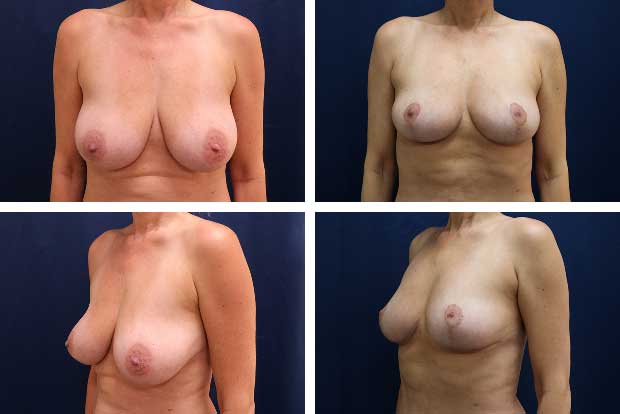
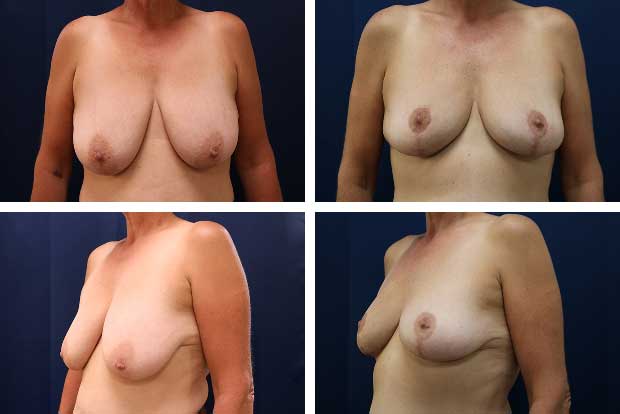
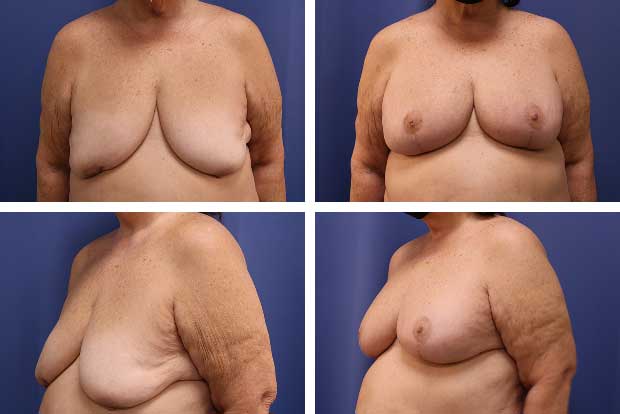
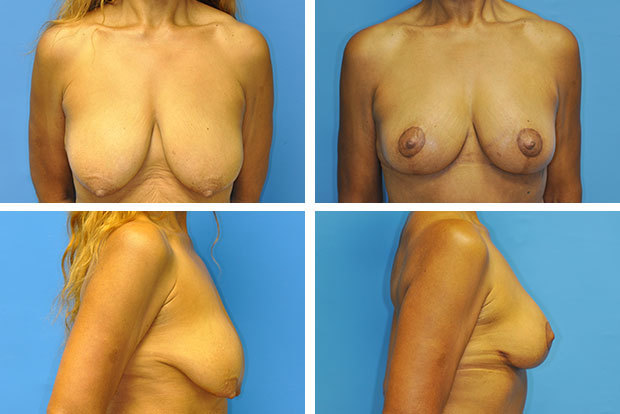
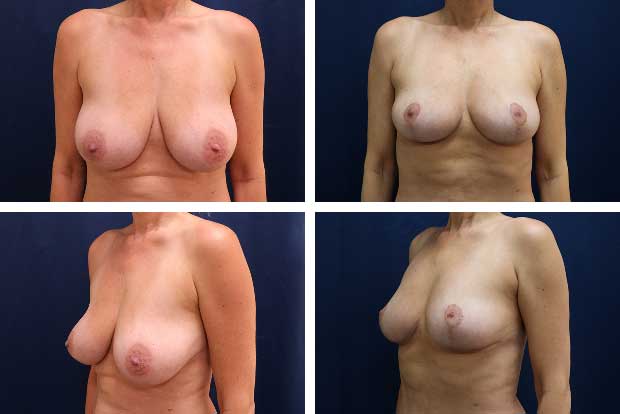
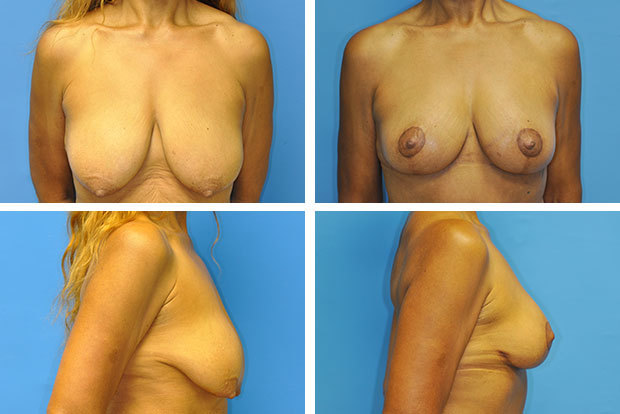
Before & After: Breast Lift

A selection of Dr. Newman's mastopexy results. All patients shown are real patients who have consented to share their photos.

Breast lift before and after Beverly Hills – patient 1
Patient 1
Breast lift before and after Beverly Hills – patient 2
Patient 2
Breast lift before and after Beverly Hills – patient 3
Patient 3
Breast lift before and after Beverly Hills – patient 4
Patient 4
Breast lift before and after Beverly Hills – patient 5
Patient 5
Breast lift before and after Beverly Hills – patient 6
Patient 6

*Each patient is unique. Results may vary. Photos are shown with patient consent.

Frequently Asked Questions

Breast Lift FAQ

Will a breast lift change my size?
A breast lift alone will not significantly change your cup size. The procedure removes excess skin, reshapes the breast tissue, and elevates the nipple-areola complex — but it does not add or remove meaningful volume. Some patients notice their breasts look slightly fuller in the upper pole after surgery, simply because the tissue is now compactly elevated rather than spread across a drooping skin envelope. If volume restoration is also a goal, Dr. Newman will discuss whether an augmentation mastopexy — combining a lift with implants or fat transfer — would better serve your objectives.
What is the difference between a lift and augmentation?
Breast augmentation adds volume: it increases the size of the breast using implants or fat transfer. A breast lift improves shape and position: it addresses drooping, repositions the nipple, and removes excess skin — but does not meaningfully change breast size. Many patients benefit from both. If you have lost volume and also have skin laxity and nipple descent, an augmentation mastopexy can address all of these concerns in a single surgery. Dr. Newman evaluates each patient individually during consultation and provides an honest recommendation about which procedure — or combination — is most appropriate for your specific anatomy and goals.
What causes breast sagging?
Breast ptosis results from a combination of factors that collectively stretch the skin and weaken the supportive ligamentous structures over time. Pregnancy and breastfeeding are the most common causes: the breast tissue enlarges significantly, stretches the skin, then involutes after weaning — leaving a deflated breast in an already-stretched envelope. Significant weight fluctuations have a similar effect. Gravity acts continuously over decades, and genetics determine how resistant any individual's breast is to these forces. Age-related loss of skin elasticity compounds all of these factors. Most women who develop significant ptosis have experienced at least one of these causes.
What do breast lift scars look like?
Scar extent depends on the degree of ptosis and the technique used. A periareolar lift leaves a circular scar at the areola border — an area known for excellent, often near-invisible healing. A vertical lift adds a scar from the lower areola to the breast fold. An anchor lift adds a horizontal scar along the fold itself. All scars are designed to be hidden within the natural breast contour and concealed by bras and swimwear. Most scars mature significantly over 12–18 months, fading from pink to a pale, thin line. Dr. Newman uses precise layered suturing and a structured scar care protocol — including silicone sheeting — to support the best possible outcome.
Can I breastfeed after a lift?
Breastfeeding after a breast lift is possible for many women, though outcomes vary. Some incision patterns involve working in proximity to the nipple-areola complex, and some disruption to milk ducts or nerve supply can occur. The degree of impact depends on the specific technique used and individual anatomy. If future breastfeeding is a priority, discuss this explicitly with Dr. Newman at consultation — he can choose an approach that minimizes ductal disruption. In general, Dr. Newman recommends that women who plan to breastfeed again consider delaying surgery until they have completed their families, so the results are not compromised by a subsequent pregnancy.
How long does a breast lift last?
The results of a breast lift are long-lasting, though the natural aging process, gravity, and future life events will continue to affect breast shape over time. Most patients enjoy their results for many years — often a decade or longer before any appreciable change in position occurs. Maintaining a stable weight, wearing a supportive bra, and protecting the skin from sun exposure all help preserve the result. Women who have their surgery at a stable life point — ideally after completing their families — tend to enjoy the most durable outcomes. A secondary lift many years later is a straightforward option if the skin eventually relaxes again.

Take the First Step

Schedule Your Breast Lift Consultation

Meet with Dr. Newman in his Beverly Hills office to discuss your goals, assess your degree of ptosis, and receive a clear recommendation on technique and approach. All consultations are private, thorough, and conducted at a pace that allows you to ask every question you have.

416 N. Bedford Drive, Suite 403 · Beverly Hills, CA 90210
310.859.0010