Overview
More Than an Aesthetic Choice
For many women, the decision to pursue breast reduction is not primarily a cosmetic one. It is a quality-of-life decision — often years in the making — driven by chronic physical discomfort that has resisted every conservative measure. Neck pain that makes long workdays intolerable. Shoulder grooves from bra straps bearing more weight than they were ever designed to carry. Rashes and skin irritation that recur beneath the breast fold regardless of how carefully the skin is tended. The growing impossibility of the physical activities that once brought joy. The endless frustration of shopping for clothes that simply do not fit.
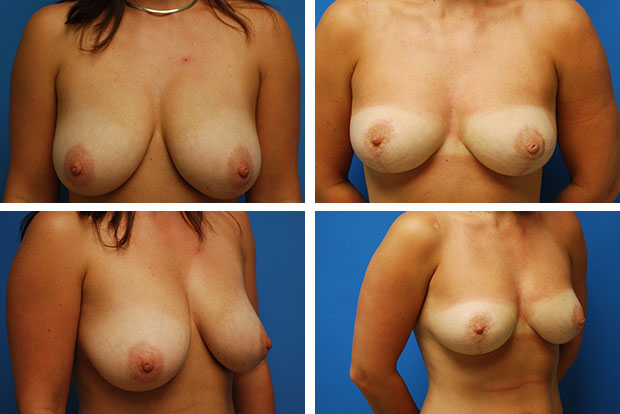
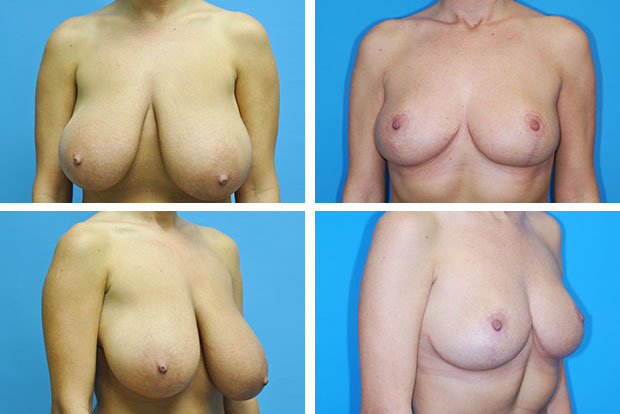
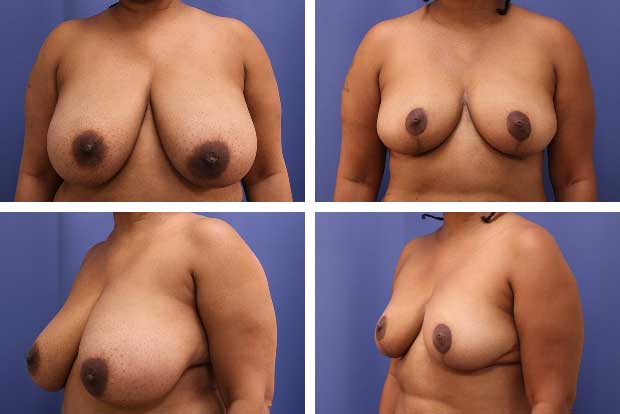
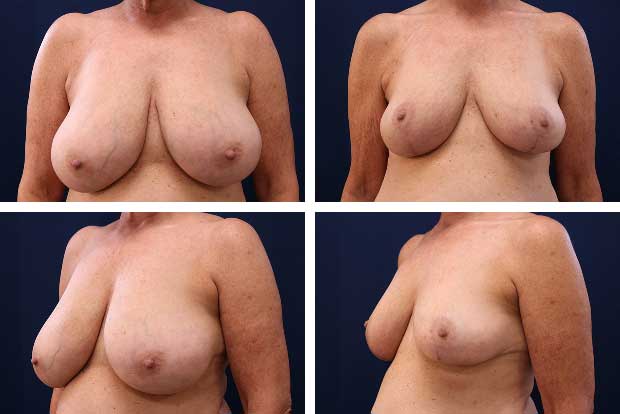
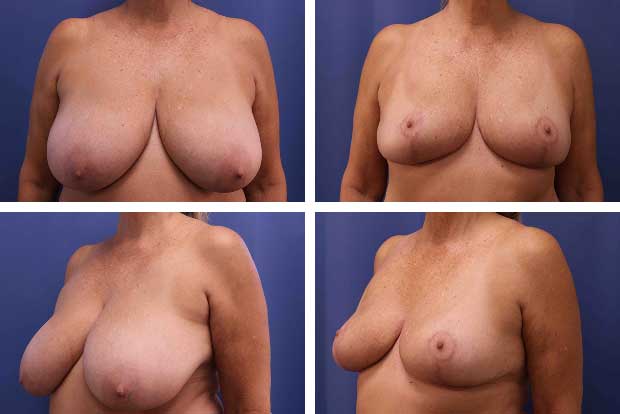
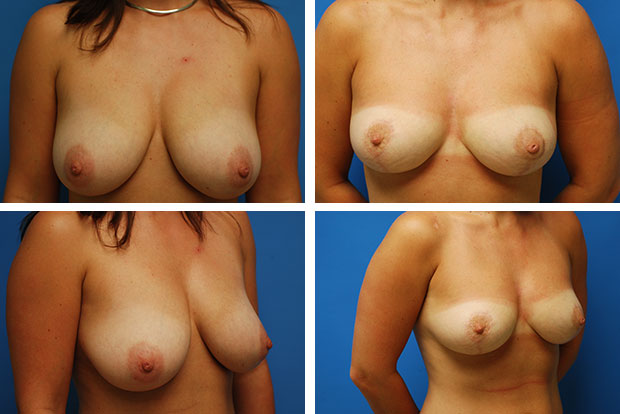
Reduction mammaplasty — breast reduction surgery — addresses all of these concerns simultaneously. By removing excess glandular tissue, fat, and skin, Dr. Newman reduces the volume and weight of the breast while simultaneously lifting it to a more youthful, proportionate position on the chest wall. The result is both functional and aesthetic: a breast that sits correctly, moves comfortably, and looks genuinely natural on the patient's frame.
Dr. Newman has been performing breast reduction at his Beverly Hills practice since 2007. His fellowship training in breast surgery at Georgetown University gave him a thorough grounding in the full range of reduction techniques, and his approach is defined by careful preoperative planning — selecting the technique best suited to each patient's anatomy rather than applying a single method universally. The outcome he consistently pursues is a result that looks as though the patient was simply born with smaller, better-proportioned breasts.
Insurance Coverage: What You Should Know
Breast reduction is one of the few plastic surgery procedures that may be covered by health insurance when medically necessary. Coverage typically requires documented symptoms such as chronic musculoskeletal pain, dermatitis or skin breakdown beneath the breast fold, and nerve symptoms — as well as a record of conservative treatments tried prior to surgery. Dr. Newman's office has extensive experience navigating the insurance pre-authorization process and can assist you in compiling the documentation needed to submit a compelling medical necessity claim. We encourage patients to contact our office early in the process so we can guide you through the requirements specific to your insurer.
The Surgical Techniques
Not every breast reduction is the same, and the technique Dr. Newman selects is tailored to the patient's anatomy, the amount of tissue to be removed, and the desired outcome. All of the approaches he employs share a fundamental commitment to preserving nipple sensation and breastfeeding potential through pedicle-based technique — meaning the nipple-areola complex remains connected to its blood and nerve supply throughout the procedure, rather than being removed and replaced as a free graft.
The three primary techniques are described below. During your consultation, Dr. Newman will review your anatomy, discuss your goals, and recommend the approach most likely to produce the best result for you specifically.
Most Common
Inferior Pedicle (Anchor Scar)
The workhorse of breast reduction surgery. The nipple-areola complex is carried on an inferior pedicle of breast tissue, which preserves excellent blood supply and nerve continuity. The resulting scar follows an anchor or inverted-T pattern — around the areola, vertically down, and horizontally along the breast fold. Ideal for patients requiring significant reductions and those whose anatomy benefits from the greater tissue reshaping this approach allows.
Shorter Scar
Vertical Scar Technique
A refined approach that eliminates the horizontal inframammary scar entirely, leaving only a periareolar scar and a vertical scar from the areola to the breast fold. Well-suited for patients requiring moderate reductions whose skin has adequate elasticity to adapt to the reshaped breast envelope. The result is a more conical, naturally projecting breast shape — and significantly less visible scarring at follow-up.
Optimal Sensation Preservation
Superomedial Pedicle
An approach that has gained favor for its superior preservation of nipple sensation and reliable blood supply, particularly for larger reductions. The pedicle is based superiorly and medially, providing excellent nipple viability even when the nipple must travel a significant distance to its new position. Often combined with a vertical or anchor scar pattern depending on the amount of skin excision required.
A Lift and a Reduction in One
One of the most commonly misunderstood aspects of breast reduction is that it is inherently also a lift. Unlike a mastopexy — which reshapes the breast skin envelope and repositions the nipple without significantly changing breast volume — a reduction modifies both. Excess skin is excised and the breast is reshaped around a smaller, lighter core of tissue. The nipple-areola complex is elevated to a more youthful position, typically sitting at or just above the level of the inframammary fold. The result is a breast that is not only smaller and lighter but also firmer, rounder, and better positioned on the chest — a comprehensive transformation accomplished in a single procedure and a single recovery.
Fellowship-Trained Care in Beverly Hills
Dr. Newman is board-certified by the American Board of Plastic Surgery, a Fellow of the American College of Surgeons, a clinical faculty member at UCLA, and a member of the American Society of Plastic Surgeons. All surgeries are performed at a fully accredited outpatient surgical facility with board-certified anesthesiologists. His practice has been serving Beverly Hills and the greater Los Angeles community since 2007, and breast surgery — in all its forms — remains at the core of what he does.